When the problem isn’t the plan — it’s the system underneath the plan
The Monday morning that repeats itself
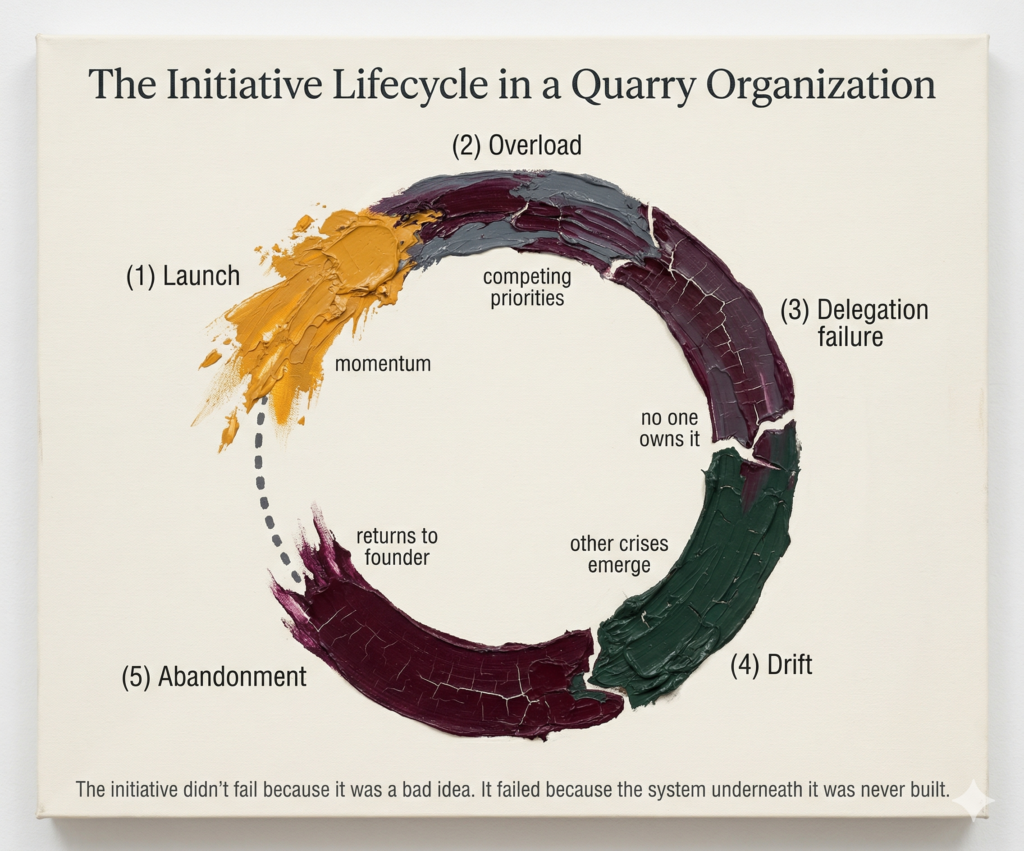
The executive director has seen this before. A new initiative launches with genuine energy — a program expansion, a staff development series, a data infrastructure project, a community partnership that could change the organization’s reach. The planning session is productive. The whiteboard fills up. People leave energized.
Six weeks later, the initiative is living in a folder no one opens.
This is not a story about poor planning. It is not a story about uncommitted staff or unrealistic timelines. It is a story about a structural condition that affects nearly every mission-driven organization operating under resource pressure — and it has a name.
The Creative System under extraction
ASQ’s Fractal Coherence Methodology maps four integrated systems that operate at both individual and organizational scale simultaneously. The Creative System is the domain of agency, generativity, and forward design — the capacity of a person or an organization to imagine something that does not yet exist and bring it into being with coherent effort over time.
In a healthy Creative System, ideas are resourced, ownership is distributed, and the organization has enough structural slack to absorb the demands of building something new alongside running what already exists. New initiatives move through a development arc: conception, design, delegation, iteration, stabilization.
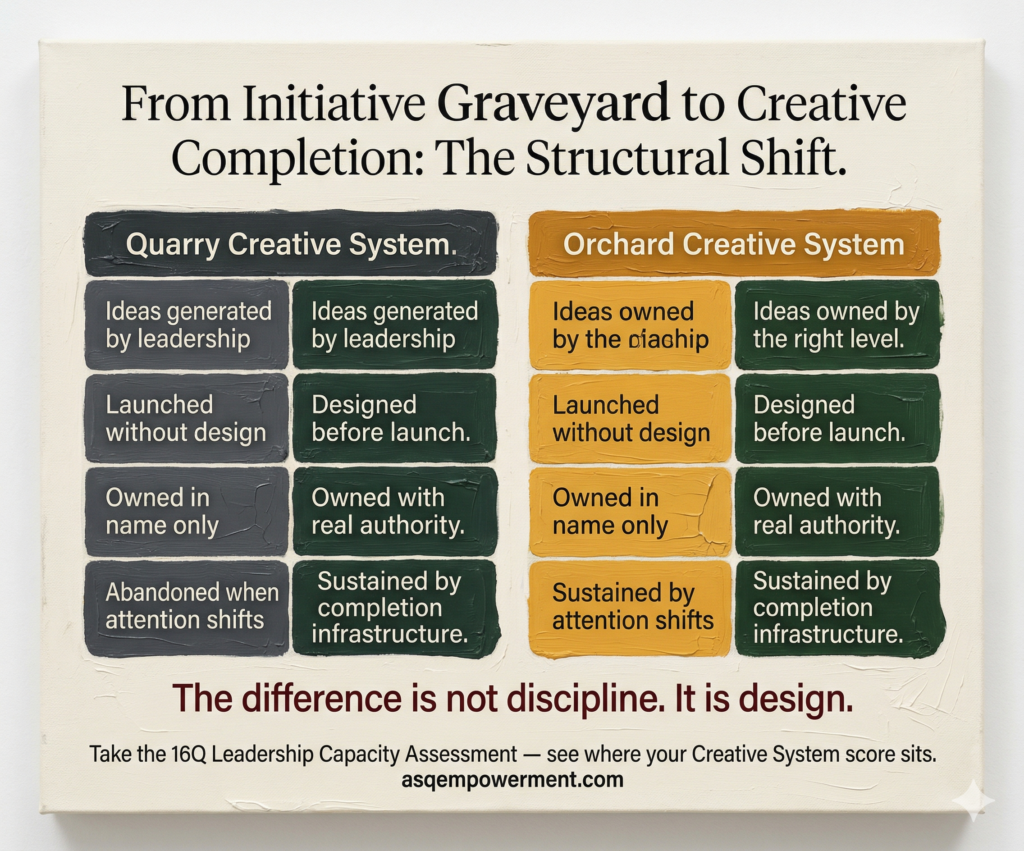
In a Quarry organization — one running on extraction, heroism, and founder-dependency — the Creative System operates under a specific and predictable distortion. The capacity to conceive is intact. The capacity to complete is not. Leadership generates ideas faster than the system can absorb them. Initiatives launch without clear ownership. Ownership without authority produces the same result as no ownership at all. Structural slack does not exist because every available unit of human capacity is already committed to keeping what is running from stopping.
The whiteboard fills. The folder stays closed.
What this looks like from inside
There is a recognizable texture to Creative System failure in a mission-driven organization. It rarely announces itself as a systems problem. It announces itself as a people problem.
The executive director concludes the team lacks follow-through. The team concludes leadership lacks focus. Both observations contain partial truth. Neither observation names the structural condition underneath them.
Gallup’s research on employee engagement is instructive here: organizations where employees report that their opinions do not count, their roles lack clear ownership, and new ideas disappear after announcement show predictable disengagement signatures within 18 months — not because staff do not care, but because the system has taught them that creative investment carries no return (Gallup, 2023). Staff in a Quarry Creative System do not stop caring. They stop launching. Self-protection, not apathy, explains the silence in the room when the next initiative is announced.
The executive director, sitting at the head of the table, may read that silence as resistance. It is, in fact, data.
The fractal pattern
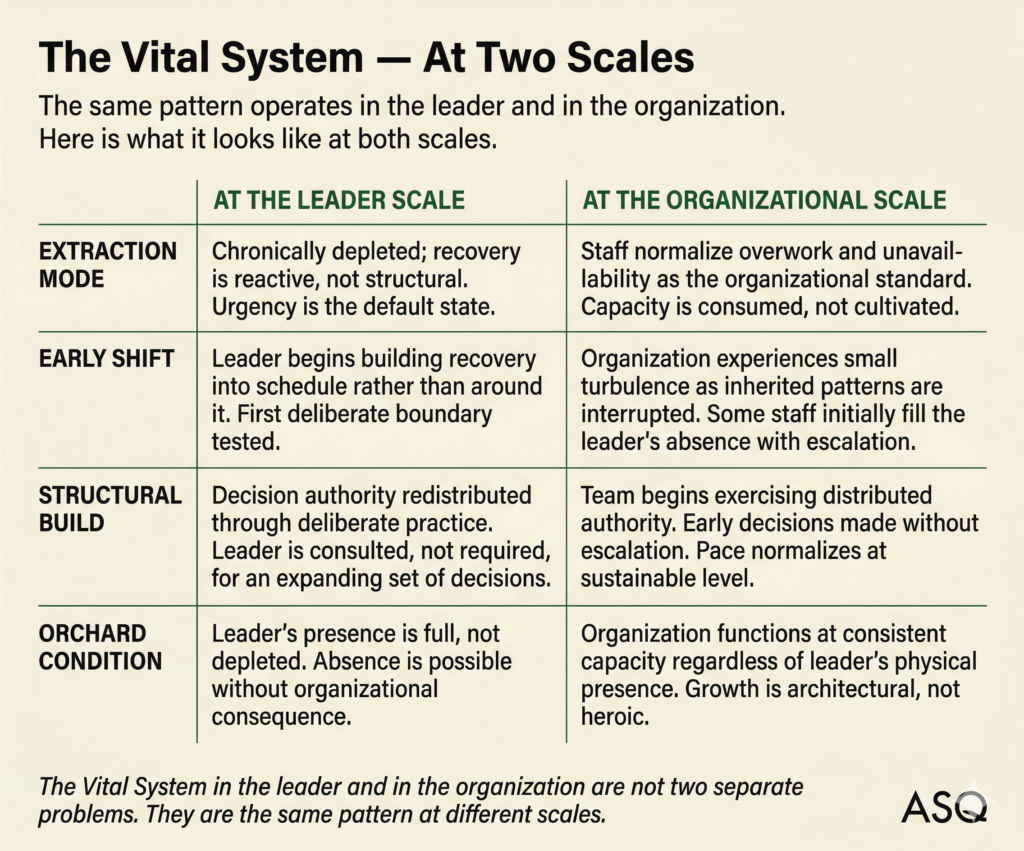
This is where the Quarry frame becomes most precise. The Creative System failure does not begin with the organization. It begins — and replicates — at the leadership scale.
Most executive directors leading mission-driven organizations carry what might be called a creation without completion pattern in their own cognitive and operational style. The drive to generate — new programs, new partnerships, new approaches — is one of the qualities that made them effective in earlier roles. In the executive director position, that generative capacity is operating inside a system that cannot receive it at full volume.
The pattern: the leader generates faster than the organization can absorb. The organization, unable to complete what has been started, produces visible dysfunction. The leader, reading that dysfunction as evidence that more initiative is needed, generates more. The cycle accelerates. The graveyard grows.
This is not a character flaw. It is a fractal expression of a Creative System that has never been designed — only inherited.
The structural cause
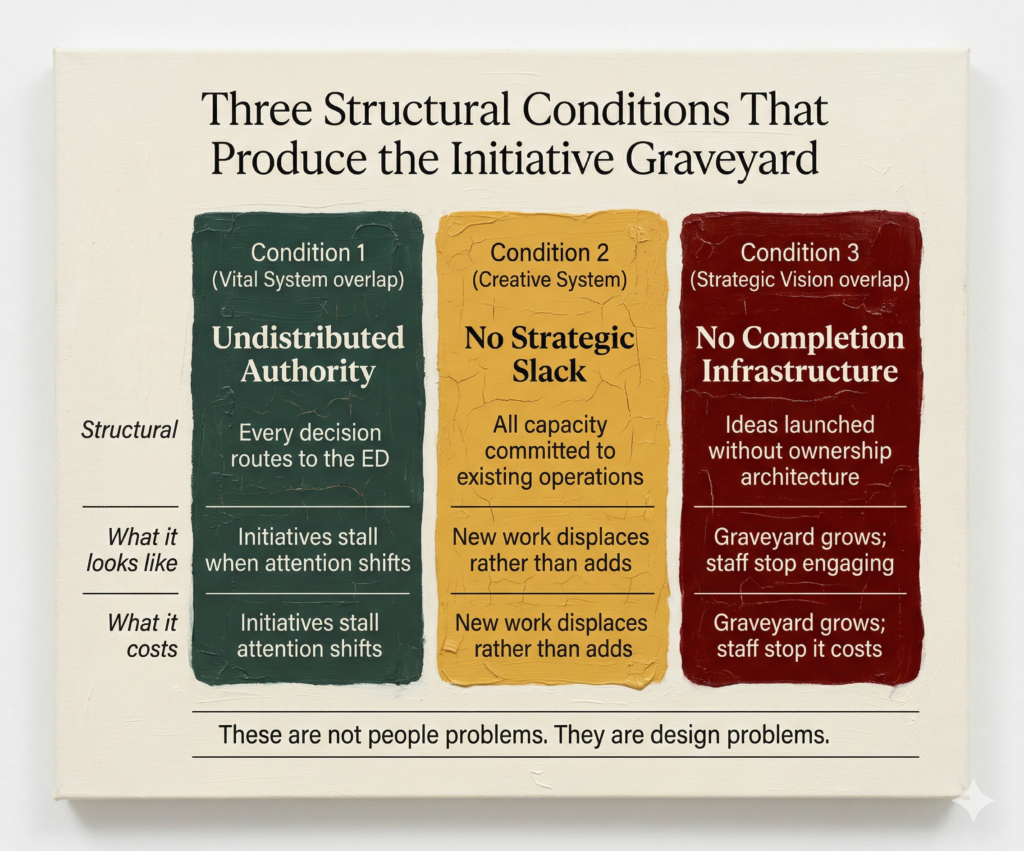
Three architectural conditions produce Initiative Graveyard syndrome in mission-driven organizations. They are predictable, diagnosable, and structural:
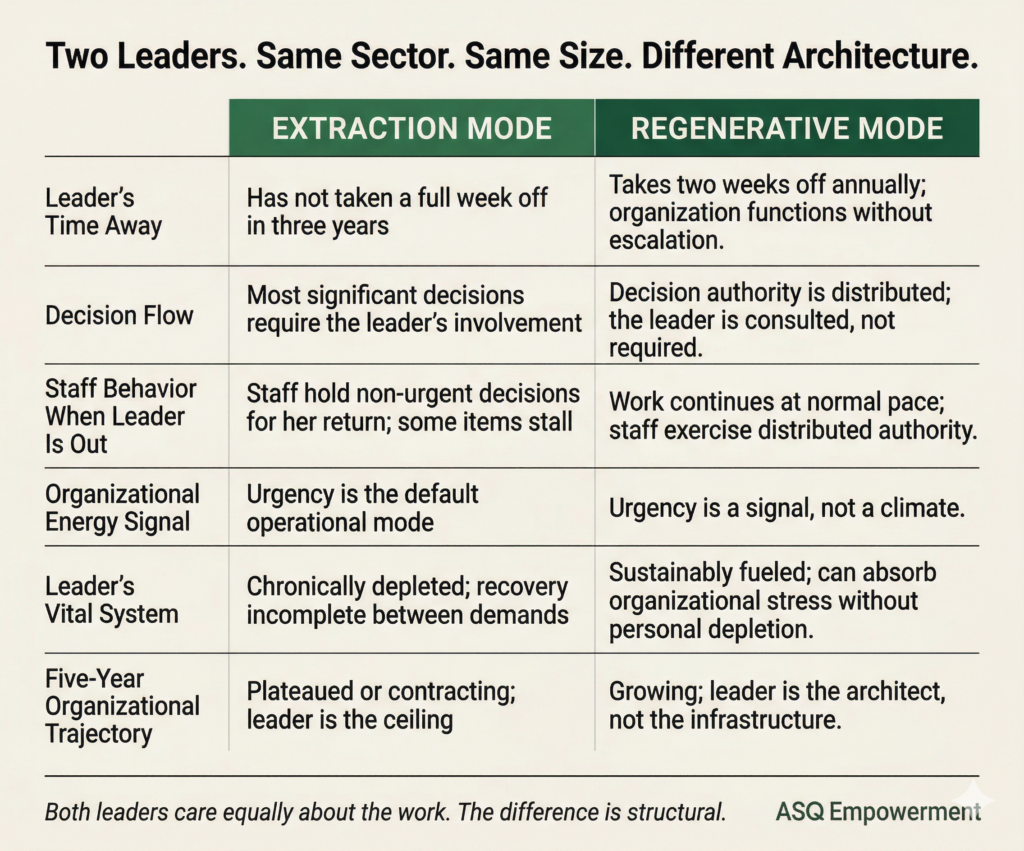
1. Distributed authority has never been built. The executive director holds decision rights that should belong to program directors, operations leads, and team managers. New initiatives require the ED’s involvement at every inflection point — which means they move only as fast as the ED can move, and they stall when the ED’s attention goes elsewhere.
2. Strategic slack does not exist. The organization is running at or above capacity on existing commitments. Every staff member’s calendar is full. New initiatives must be absorbed into a system with no available capacity, which means they displace existing work rather than adding to it — producing the perception of chaos rather than growth.
3. The Creative System has no infrastructure. There is no formalized process for moving an idea from conception to ownership to delivery accountability. Initiatives are announced but not designed. Design without infrastructure is aspiration, not execution.
These three conditions are not caused by individual failure. They are the predictable output of an organization that has grown through heroism rather than architecture.
The difference between a Quarry and an Orchard Creative System
An Orchard organization does not generate fewer ideas. It generates ideas inside a system designed to receive them.
The distinction is architectural, not motivational. An executive director with a well-functioning Creative System does not have more discipline or more restraint. They have built — deliberately or through good guidance — the structural conditions that allow initiative to move from conception to completion without routing everything through a single human bottleneck.
Distributed authority means program directors can own their initiatives with genuine decision rights. Strategic slack means the organization has built some capacity reserve — not abundance, but room to absorb what is new without displacing what is running. Completion infrastructure means every initiative enters a formalized development process: named owner, defined scope, milestone accountability, and a review cadence that catches drift before it becomes abandonment.
The whiteboard in the Orchard still fills. But the folder gets opened.
What the data shows about sustainable organizational creativity
Research on organizational innovation in resource-constrained nonprofit environments consistently identifies the same bottleneck: the constraint is not ideation, it is structural capacity for execution. A longitudinal study of mission-driven organizations found that those with documented decision-rights frameworks and formalized initiative management processes were 2.6 times more likely to successfully implement strategic priorities than those without such frameworks, regardless of budget size (Battilana & Lee, 2014). The constraint, in other words, is never the mission. It is the architecture.
This finding maps precisely onto what ASQ observes in the Creative System across the organizations it serves. The ideas are not the problem. The leaders generating them are not the problem. The structure available to receive and process them is where the dysfunction lives — and where the intervention belongs.
The path forward
The initiative graveyard is not evidence that your organization cannot execute. It is evidence that execution architecture has not yet been built.
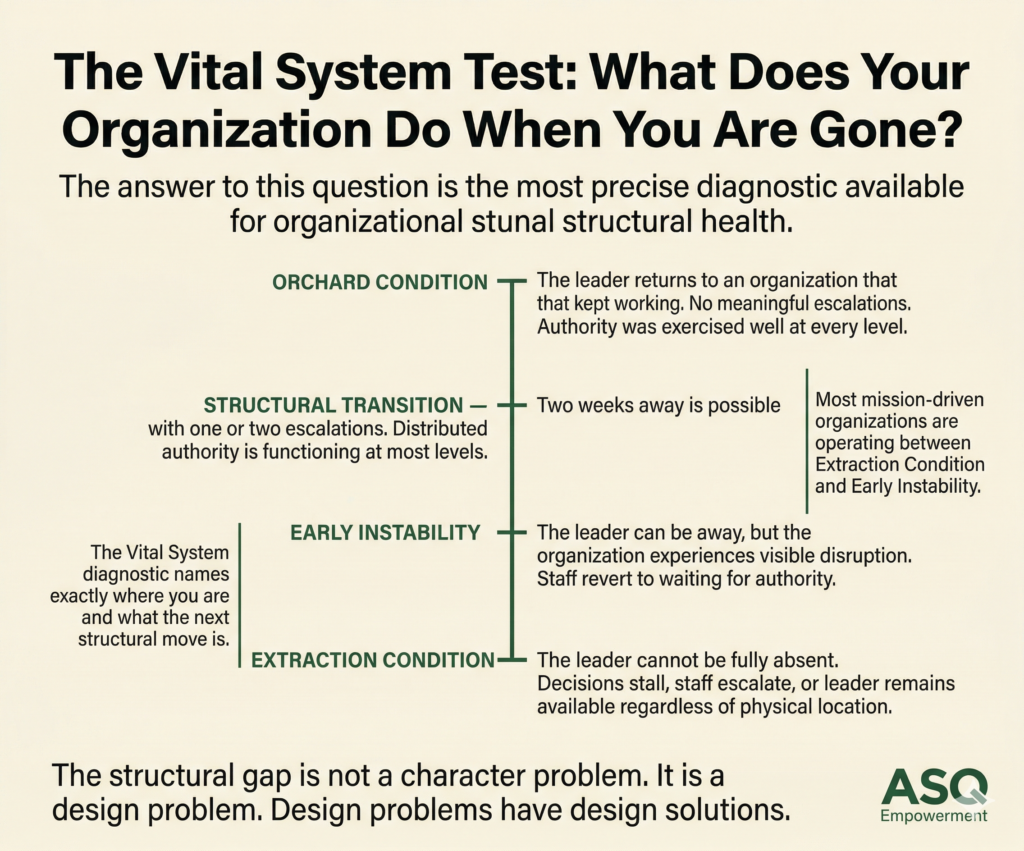
The diagnostic work begins with one question: Does your organization have a formalized process for moving from idea to ownership to completion accountability — or does each new initiative invent its own process from scratch? If the answer is the latter, you are not looking at a people problem or a commitment problem. You are looking at the predictable output of a Creative System that has never been designed.
That design is not complex. It is architectural.
If the pattern described in this article is familiar — if your organization has a whiteboard full of good ideas and a folder full of unfinished ones — the Leadership Capacity Assessment is a useful starting point. It takes five minutes and maps where your organization’s Creative System score sits relative to the other three systems. The results are specific. Book a conversation with Jessie Ferreira at yoursoulcycle.com if you want to understand what those results mean for your organization.
#NonprofitLeadership #ExecutiveDirector #OrganizationalHealth #MissionDriven #LeadershipDevelopment Instagram: #NonprofitLife #ExecutiveLeadership #OrchardLeadership #LeadershipCoherence #ASQEmpowerment
References
Battilana, J., & Lee, M. (2014). Advancing research on hybrid organizing — insights from the study of social enterprises. Academy of Management Annals, 8(1), 397–441. https://doi.org/10.5465/19416520.2014.893615
Gallup, Inc. (2023). State of the global workplace: 2023 report. Gallup Press. https://www.gallup.com/workplace/349484/state-of-the-global-workplace.aspx
Gelles, D. (2022). The man who broke capitalism: How Jack Welch gutted the heartland and crushed the soul of corporate America — and how to undo his legacy. Simon & Schuster.
Meadows, D. H. (2008). Thinking in systems: A primer. Chelsea Green Publishing.Senge, P. M. (1990). The fifth discipline: The art and practice of the learning organization. Doubleday/Currency.