

You Don’t Know Yourself as Well as You Think
Most executives operate under a dangerous assumption: I’m self-aware. I see the full picture. I know what I’m doing.But Carl Jung, the pioneering psychologist who mapped the hidden architecture of human consciousness, would call that claim ego inflation—the mind’s most predictable trap.
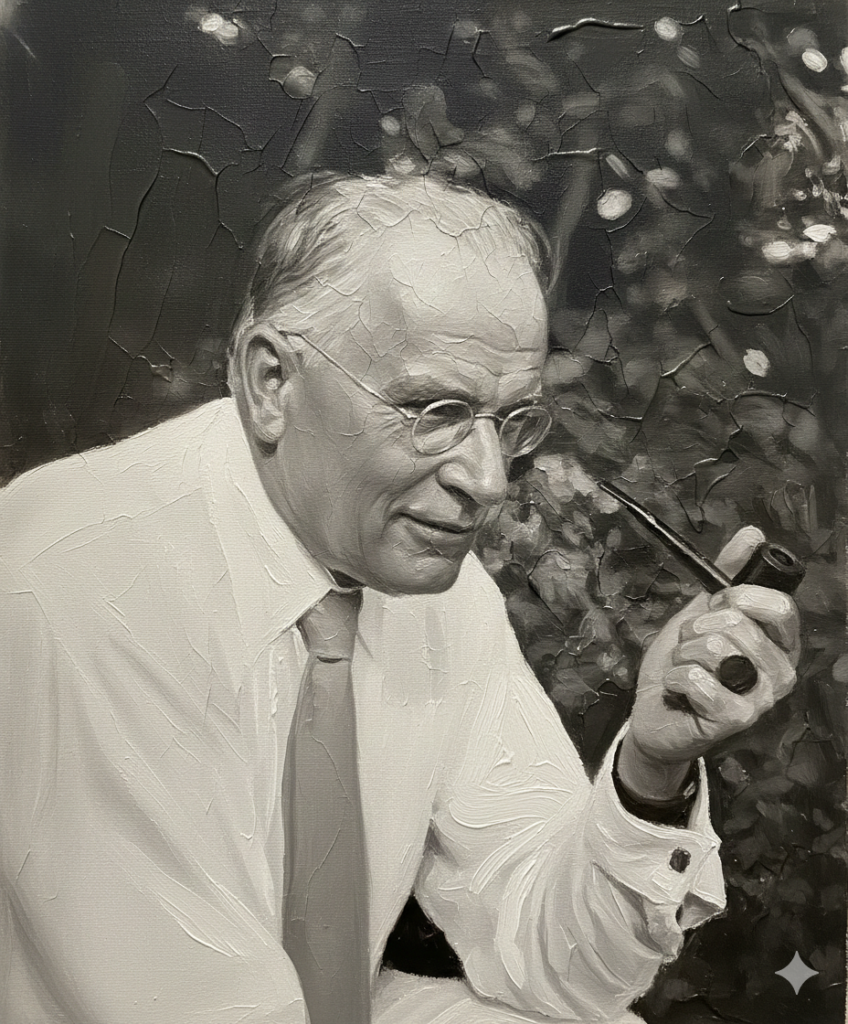
Jung described the ego as the “center of consciousness”—the part of you that experiences being “I.” It filters reality, makes decisions, and maintains your sense of identity across time. It’s the command center of your awareness.
But here’s what most leaders miss: your ego is only about 10% of who you are.
Jung was blunt about this: “The ego is only a bit of consciousness that floats upon an ocean of dark things.” Your unconscious drives, unexamined assumptions, repressed emotions, and cultural conditioning govern far more of your behavior than your conscious mind realizes.
Translation: You have massive blind spots. And those blind spots directly create toxic culture, strategic failures, and burned-out teams.
The Quarry Leadership Model: When “It” Destroys Value
Jack Welch’s GE exemplified what Jung called an ego-inflated system—one that mistakes its limited perspective for total reality.
Welch saw employees as “it”—objects to optimize and discard. His “rank and yank” system treated people as interchangeable units in a shareholder-maximization machine. The ego driving that system was brilliant, hyper-rational, and catastrophically incomplete.
Why? Because rigid egos repress what threatens them.
Jung identified the Shadow—the unconscious repository of everything the ego refuses to acknowledge. For Welch’s GE, the Shadow contained:
- Worker dignity
- The value of long-term trust
- Innovation requiring psychological safety
- Stakeholder relationships that create sustainable wealth
All of it was dismissed as “soft.” And when 40,000 employees were laid off while Welch collected $417 million in retirement, the shadow erupted: GE lost $600 billion and was erased from the Dow after 110 years.
The Quarry Ego sees “it” everywhere. Resources to extract. Metrics to hit. People to rank. And because it only sees “it,” it cannot perceive the living beings—the “thou”—who actually generate innovation and value.
The Shift That Changes Everything: “It” vs. “Thou”
Joseph Campbell, the mythologist who studied humanity’s deepest stories, articulated the psychological shift required for generative leadership:
“The ego that sees an ‘it’ is not the same ego that sees a ‘thou.'”
What does this mean?
The “It” Perspective:
- Detached, transactional, utilitarian
- Views people and nature as objects to use
- Enables extraction, domination, destruction
- Result: Short-term gains, long-term collapse
The “Thou” Perspective:
- Empathetic, relational, sacred
- Views people and nature as beings worthy of respect
- Enables partnership, reciprocity, regeneration
- Result: Long-term flourishing, sustained innovation
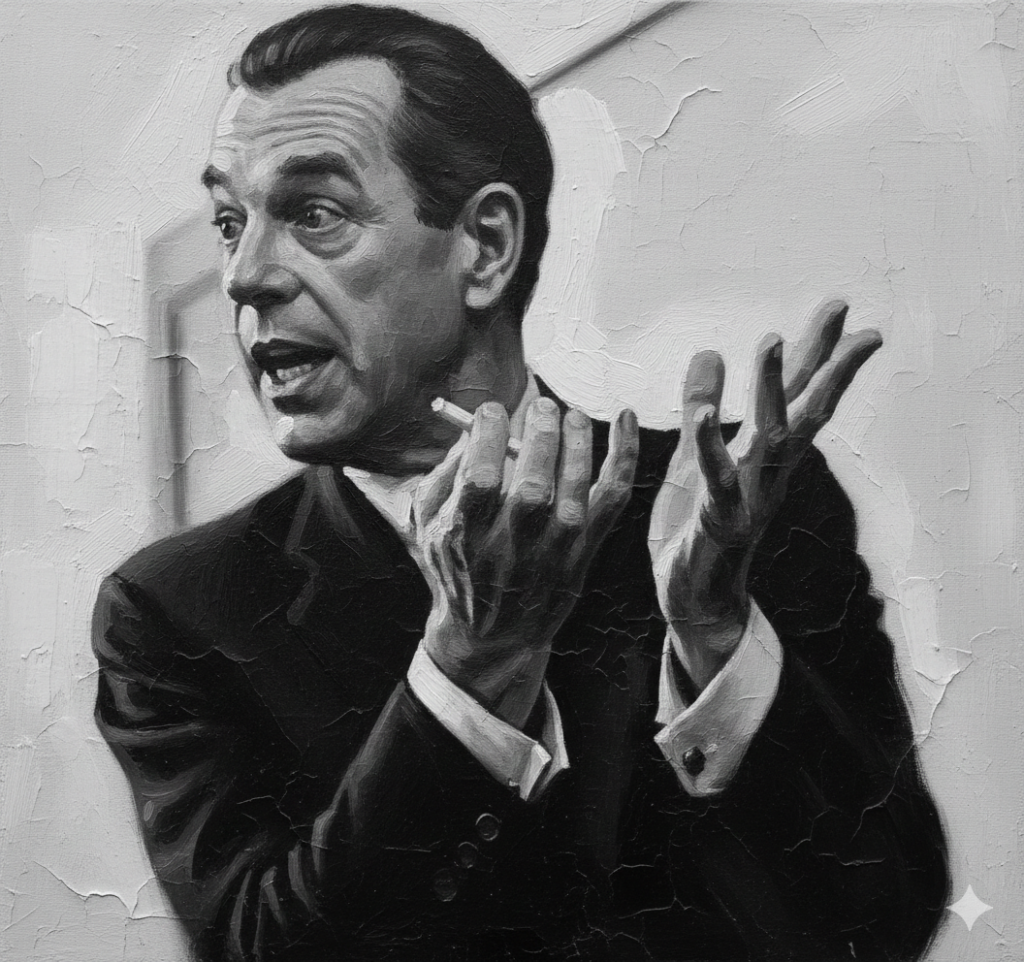
Campbell explained: “Your whole psychology changes” based on this shift. When you see the world as “it,” you can clearcut forests, rank and yank workers, or bomb villages. When you see the world as “thou,” you recognize the dignity and sacred worth in all beings—and you cannot act in the same extractive ways.
Milton Hershey embodied “thou” leadership.
During the Great Depression, while competitors slashed payrolls, Hershey launched a massive building campaign to keep workers employed—not to maximize quarterly earnings, but because he saw them as human beings whose families and dignity mattered. He built a town, a school, and a trust structure that protects stakeholders in perpetuity.
The result? Hershey remains one of the world’s most trusted brands 130+ years later.
The difference was not intelligence. It was consciousness.
Why Your Ego Can’t Get You Where You Need to Go
Here’s the uncomfortable truth: your ego cannot expand itself without help.
Your conscious mind operates in a closed loop. It sees what it expects. It filters for confirming evidence. It represses what threatens stability. This isn’t a character flaw—it’s neurobiology. Your brain conserves energy by automating perception.
For leaders, this creates three predictable traps:
1. The Persona Trap
You over-identify with your professional mask (CEO, Visionary, Expert) and lose access to vulnerability, uncertainty, and relational need. You become brittle. Your teams walk on eggshells. Innovation dies because breakthroughs require admitting you don’t have all the answers.
2. The Shadow Trap
Everything you repress—fear, grief, doubt, need for connection—doesn’t disappear. It leaks out sideways: passive aggression, blame-shifting, emotional volatility, sudden collapses. Leaders who deny their Shadow create toxic cultures because unacknowledged material acts out through unconscious behavior.
3. The Inflation Trap
Ego inflation happens when leaders mistake their limited perspective for omniscience. “I see the market clearly. I know what’s best.” But Jung warned: inflation always precedes a fall. When egos refuse to acknowledge limits, reality forces correction—usually catastrophically.
Quarry leadership is ego inflation at scale. It denies complexity, represses relational needs, and extracts until collapse.
Orchard leadership recognizes ego’s limits—and invites something larger.
The P.E.P. Framework: Expanding Your Operating System
Jung believed individuation—integrating unconscious material into consciousness—was central to human maturation. For leaders, this isn’t therapy-speak. It’s business-critical infrastructure.
You cannot lead complex organizations with a defensive, rigid ego. You need expanded executive function: the ability to hold paradox, integrate shadow material, tolerate ambiguity, and shift perspectives.
Enter ASQ’s P.E.P. Framework: Perspective → Experience → Philosophy.
It’s a repeating spiral that moves leaders from fragmentation (ego defending against reality) to coherence (ego serving the larger Self).
PERSPECTIVE (Step Back)
Core Function: Opening for Transformation
Pause automatic reactivity. Notice your ego’s defensive patterns. Where are you treating people, challenges, or complexity as “it” instead of “thou”?
Practical Application:
- Before major decisions, ask: What am I not seeing? What perspective am I dismissing?
- Implement 90-second breathing protocols before high-stakes meetings
- Track emotional triggers: When do you shut down feedback? When do you over-function?
EXPERIENCE (Step Through)
Core Function: The Crucible of Transformation
Engage with the discomfort. Investigate unconscious material driving behavior. What Shadow content are you repressing? What relational needs are you denying?
Practical Application:
- Conduct stakeholder listening tours: What do employees, customers, partners experience that you cannot see from your position?
- Journal on Campbell’s question: Where am I seeing “it” when I should be seeing “thou”?
- Engage peer coaching where your Persona can be challenged safely
PHILOSOPHY (Step Forward)
Core Function: Integration and Meaning-Making
Extract wisdom from experience. Integrate new awareness into action. Shift from ego-as-hero (controlling outcomes) to ego-as-servant (facilitating emergence).
Practical Application:
- Redesign decision-making structures to include voices you previously filtered out
- Experiment with stakeholder-first metrics alongside shareholder returns
- Model vulnerability: Share what you’re learning, where you were wrong, how you’re evolving
Campbell’s Insight: The Philosophy stage is where the shift from “it” to “thou” solidifies—and it changes everything. Employees become partners. Customers become community. Competitors become ecosystem collaborators.
This is not soft leadership. This is sophisticated leadership.
The Spiral: Why One Cycle Isn’t Enough
Most leadership development treats transformation as a destination. You “complete” a program and you’re done.
P.E.P. is a spiral, not a ladder.
You move through Perspective-Experience-Philosophy at one level of complexity, integrate that learning, and immediately encounter a new edge. Jung called this circumambulation—walking around the center, seeing it from new angles, spiraling closer to wholeness.
Milton Hershey’s Spiral:
Hershey didn’t start fully formed. His early ventures failed repeatedly. But each failure became a P.E.P. cycle:
- Perspective: Failure forces reflection
- Experience: What did I miss? What pattern keeps repeating?
- Philosophy: Try a different approach, informed by shadow integration
By the time he built the chocolate empire, he had spiraled through enough cycles to see employees as “thou,” design for stakeholder flourishing, and structure governance protecting mission beyond his lifetime.
Jack Welch never spiraled. He perfected one ego strategy—domination through metrics—and rode it until collapse.
Why Leaders Resist the Spiral
If P.E.P. is so effective, why don’t more leaders use it?
Because the ego hates Perspective (the Pause).
Jung observed that the ego’s primary function is maintaining stability. Pausing threatens that. Exploring shadow material is uncomfortable. Philosophy (integration) requires admitting you were wrong.
And American business culture—steeped in Welchism—rewards the opposite:
- Decisive action over reflection
- Certainty over curiosity
- Control over collaboration
- Extraction over cultivation
The result? Leaders trapped in ego inflation, unable to see blind spots, surrounded by teams too afraid to tell the truth.
This is the Quarry’s terminal diagnosis: ego rigidity in a world demanding adaptive complexity.
The Orchard Invitation: Ego in Service of Something Larger
Jung’s ultimate vision was individuation: the ego evolving from defensive hero to conscious servant of the larger Self—integrating conscious and unconscious, personal and collective, rational and relational.
For leaders, this means:
- Your role is not having all answers but creating conditions where answers emerge
- Your job is not controlling outcomes but cultivating soil where innovation grows
- Your identity is not fixed but continuously evolving through relationship and integration
This is Orchard leadership.
It doesn’t mean abandoning metrics, strategy, or accountability. It means expanding your operating system so you can hold complexity without collapsing into defensive simplicity.
The data is clear:
- Stakeholder-focused companies: 682% revenue growth vs. 166% shareholder-only (Kotter & Heskett, 1992)
- High-trust organizations: 286% higher shareholder returns (Watson Wyatt, 2002)
- Engaged employees: 21% higher profitability (Gallup, 2016)
Seeing “thou” instead of “it” is not just morally superior—it’s economically superior.
But you cannot decide to see “thou.” You must expand your ego’s capacity to perceive it.
And that requires the spiral.
References
Campbell, J. (1988). The power of myth (B. Moyers, Interviewer). Doubleday.
D’Antonio, M. (2006). Hershey: Milton S. Hershey’s extraordinary life of wealth, empire, and utopian dreams. Simon & Schuster.
Gallup. (2016). The relationship between engagement at work and organizational outcomes. Gallup Press.
Gelles, D. (2022). The man who broke capitalism: How Jack Welch gutted the heartland and crushed the soul of corporate America—and how to undo his legacy. Simon & Schuster.
Jung, C. G. (1968). The archetypes and the collective unconscious (2nd ed., R. F. C. Hull, Trans.). Princeton University Press. (Original work published 1959)
Kotter, J. P., & Heskett, J. L. (1992). Corporate culture and performance. Free Press.
Siegel, D. J. (2012). The developing mind: How relationships and the brain interact to shape who we are (2nd ed.). Guilford Press.Watson Wyatt Worldwide. (2002). WorkUSA 2002: Weathering the storm—A study of employee attitudes and opinions. Watson Wyatt.